

How to Choose a Queer-Friendly Wedding Photographer
You’ve found a photographer whose work you love. The lighting is gorgeous, the photos feel like stills from a movie, and you can already imagine your own wedding looking something like that.
Then you start scrolling through their portfolio.
Bride. Groom. Bride. Groom. Another bride and groom.
And suddenly you’re wondering whether this photographer has ever worked with a couple like you, or whether you’ll spend your wedding day explaining things that should never need explaining.
I’m queer, so I get it. Finding the right person behind the camera can mean a lot more than finding someone who takes beautiful pictures.
You want someone who makes you feel comfortable, respected, and genuinely excited to be photographed. Someone who understands that relationships, identities, and wedding traditions don’t all fit into the same neat little boxes.
And ideally, someone who sees you as an actual couple, not an opportunity to diversify their Instagram feed.
So, how do you find that person? Here’s what I’d look for.

1. Look Beyond the Rainbow Flag on Their Website
Seeing “LGBTQ+ friendly” on a photographer’s website is a good starting point, but those words don’t necessarily tell you what working with them will actually feel like.
Inclusivity should be something you experience throughout the entire process, from your first inquiry to the moment you receive your wedding gallery.
Start by looking at how they talk about the people they photograph.
Do they use inclusive language like “couples” and “partners,” or does every description assume there’s a bride and a groom? Do their contact forms give you space to describe your relationship and identities without forcing you into predetermined boxes?
And perhaps most importantly, do you get the sense that they’re genuinely interested in who you are?
You shouldn’t have to squeeze your relationship into someone else’s idea of what a wedding is supposed to look like.
Some couples want traditional wedding portraits. Others want something completely different. Neither approach is more or less queer, and a good photographer should be able to work with what feels right for you.
2. Look for Diverse Couples in Their Portfolio
A photographer’s portfolio can tell you a lot about their experience, artistic style, and the people they’ve worked with.
If you’re looking for an experienced, queer-friendly wedding photographer, it’s worth seeing whether they’ve photographed queer weddings, elopements, or couples sessions before.
But keep in mind that a photographer’s portfolio doesn’t always represent everyone they’ve photographed.
Not every couple wants their photographs shared publicly, and photographers should respect those preferences. There are plenty of personal reasons someone might choose to keep their images private, regardless of their identity or relationship.
So, while representation in a portfolio is meaningful, a lack of publicly shared queer weddings isn’t automatically a dealbreaker. You can always ask whether the photographer has relevant experience or additional galleries they’re permitted to share.
Pay attention to how they talk about queer couples, too
Here’s something else worth noticing: how does a photographer talk about their queer clients compared with everyone else?
Are they telling you something about the couple, their personalities, and the moments that made their wedding memorable? Or is the entire caption about how excited the photographer is to be photographing an LGBTQ+ wedding?
There’s nothing wrong with celebrating queer love. But there’s a difference between genuine enthusiasm and making someone’s identity the main attraction.
Sometimes photographers fall into performative allyship or tokenism without even realising it. Their intentions might be lovely, but the language can make it seem like photographing a queer couple is a novelty rather than a normal part of their work.
That doesn’t automatically mean they’re a bad photographer or an unsupportive person. It might, however, tell you something about their experience.
When reviewing their work, pay attention to more than who appears in the photographs.
Do the couples seem comfortable? Are their personalities coming through? Do the portraits feel like real people enjoying each other’s company, or like everyone was given the same five poses?
For me, wedding photography should be about the people in front of the camera, not making every couple fit the same visual formula.


3. Find Someone Who Doesn’t Make Assumptions About You
A photographer shouldn’t automatically assume who will walk down the aisle, who’s wearing what, or which partner wants the more traditionally masculine or feminine poses.
Maybe you’re both wearing suits. Maybe you’re both wearing dresses. Maybe neither of you is wearing anything remotely traditional.
Maybe you’re skipping the aisle altogether and having your ceremony in the middle of the forest.
Count me in.
The point is that your photographer should ask questions rather than arrive with assumptions.
That includes respecting names and pronouns, understanding how you refer to your relationship, and listening when you explain what’s important to you.
For trans and gender-diverse folks, it can also mean finding someone who understands that posing, clothing, and the way you’re photographed can be connected to how you want to express your gender.
Maybe you’re trans masc and love a strong, traditionally masculine portrait. Maybe you’re trans fem and want something softer and more traditionally feminine. Maybe those descriptions don’t fit you at all.
Your photographer shouldn’t be deciding what masculine, feminine, or gender-affirming photography looks like for you. That’s your call.
And that’s really the point. Queer couples aren’t one big interchangeable group.
A same-gender couple, a non-binary person marrying a cisgender partner, and two trans people planning their wedding might have completely different experiences, priorities, and comfort levels. Even two couples with similar identities might want entirely different things.
Your photographer doesn’t need to know everything about your identity before meeting you. They should, however, respect your boundaries, listen to what matters to you, and be willing to learn without expecting you to explain the basics.
4. Pay Attention to How Comfortable You Feel Around Them
This one is important for every couple, but especially when you’ve spent time navigating spaces where you weren’t sure how openly you could be yourself.
Your wedding photographer will be around for some incredibly personal moments. Getting ready, seeing each other for the first time, quiet conversations before the ceremony, and that moment when you realise you’re actually married and suddenly forget what to do with your hands.
You want someone who can be present for those moments without making them feel awkward or performative.
And if you’re already someone who hates having their photo taken? Well, welcome to the club. You’re very much my kind of person.
A lot of the people I photograph tell me they’re awkward in front of the camera. They worry about posing, looking unnatural, or spending their wedding day feeling like they’re trapped in an eight-hour photoshoot.
My approach is to give you direction when you need it and space when you don’t.
Sometimes that means helping you find the right light or giving you something to do with your hands. Other times, it means stepping back because the way you’re looking at each other is already better than anything I could have arranged.
For queer and gender-diverse couples, that comfort can also mean not feeling pressured to present your relationship in a way that doesn’t feel natural.
Maybe you love being affectionate in front of the camera. Maybe public displays of affection aren’t your thing. Neither should change how welcome you feel. You should be able to hold each other, laugh, be affectionate, or simply exist together without wondering whether the person photographing you is judging any of it.


5. Talk About the People and Traditions That Matter to You
Weddings bring together all kinds of people, relationships, traditions, and expectations. Sometimes those things fit together beautifully. Sometimes they require a little more planning.
For some queer folks, that might include navigating family members who aren’t fully supportive, guests who use the wrong pronouns, or wedding traditions that don’t reflect their relationship.
For others, none of that is an issue. Their biggest concern might be getting everyone organised for family photos before someone wanders off to the bar.
Every couple and every family is different.
The important thing is having a photographer you feel comfortable talking to about whatever might affect your wedding day.
For example, you might want to discuss:
- Which people are most important to photograph and how you’d like to organise group portraits.
- Whether you’re incorporating traditional wedding customs, adapting them, or skipping them altogether.
- How you’d like your photographer to refer to you, your partners, or members of your wedding party.
- Whether there are sensitive family relationships or boundaries to be aware of.
- How your photographer can help keep portrait sessions relaxed and respectful.
Your photographer isn’t responsible for managing every family relationship, but a little communication beforehand can make things much easier.
And if there’s something personal or sensitive you’d like them to know, you should feel comfortable bringing it up without worrying about how they’ll react.
6. Make Sure Their Photography Style Actually Fits You
Finding an inclusive, affirming wedding photographer matters. So does loving their photographs.
You deserve both.
There are several approaches to wedding photography, and understanding them can help you figure out what you’re drawn to.
Documentary wedding photography focuses on real moments as they unfold, with minimal intervention. Think spontaneous laughter, emotional reactions, and the little things happening when nobody realises they’re being photographed.
Editorial wedding photography uses more intentional composition and direction. It often feels polished, artistic, and influenced by fashion photography.
Cinematic wedding photography, which is how I describe my own approach, combines emotional storytelling with intentional use of light, movement, atmosphere, and composition.
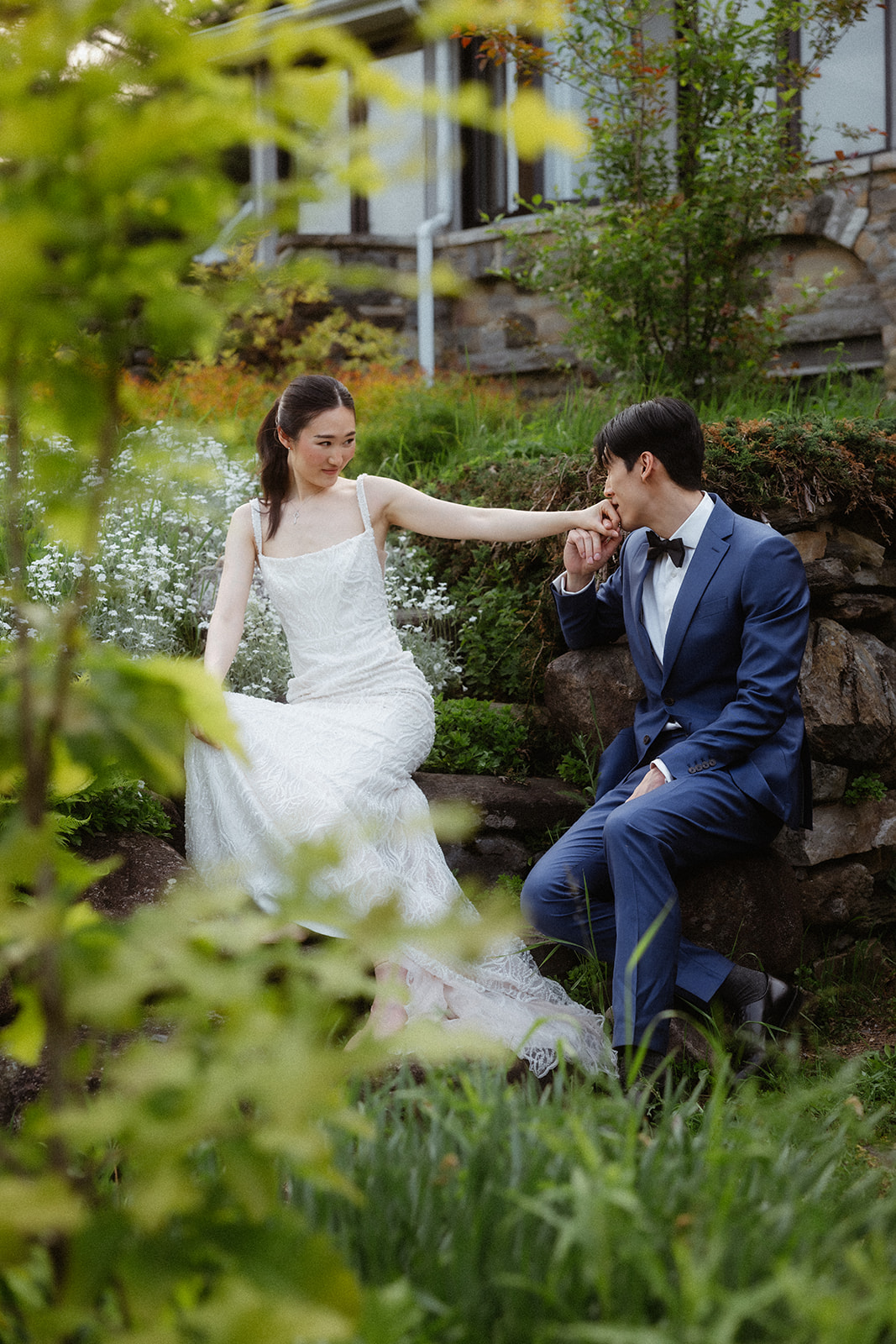
I think of a wedding gallery a little like scenes from a film. There are the wide photographs that show where everything happened, the close-ups of hands and details, the portraits we intentionally create, and the moments you didn’t even realise were happening.
My work combines documentary honesty with editorial influences because I love photographs that feel artistic without losing the people inside them.
But that’s my style. The important thing is finding someone whose work makes you feel something.
And please, look at full wedding galleries rather than just Instagram highlights. A photographer should be able to create beautiful portraits and photograph everything else that makes your wedding yours.

7. Talk About Privacy Before You Book
Not everyone wants their wedding photographs shared publicly, and there are plenty of reasons why.
Maybe you love sharing photos online. Maybe you don’t. Maybe you’re comfortable posting your wedding pictures on your own accounts but don’t want them used to advertise someone else’s business.
For some queer folks, there can be additional considerations.
You might not be out at work, or there might be family members you’ve intentionally distanced yourself from. The last thing you want is for your wedding photographs to find their way into spaces where you didn’t choose to share them.
Or maybe you’re completely out and proud but still prefer to keep your wedding private.
All of those are reasonable.
Before signing a contract, ask whether your photographer shares wedding photographs on their website, social media, or in promotional materials. Find out what options are available if you’d prefer your images to remain private and how those preferences are documented.
Being comfortable in front of someone’s camera doesn’t automatically mean you’re comfortable having those photographs shared publicly.
The best time to have that conversation is before booking, so everyone understands the expectations.
Questions to Ask During Your First Call with the Photographer
You don’t need to turn your discovery call into a job interview with seventeen spreadsheets. (Unless that’s your thing. I respect a good spreadsheet.)
But a few thoughtful questions can tell you a lot about what working together might look like.
Here are some worth asking:
- Have you photographed queer, trans, or gender-diverse couples before? Ask about their experience, and whether they have relevant galleries they’re permitted to share.
- How do you approach posing couples? Listen for whether they adapt to different bodies, relationships, and comfort levels rather than assigning gendered roles.
- How do you get to know us before the wedding? A good photographer should want to understand your personalities, priorities, and plans.
- How do you handle family portraits or sensitive situations? Their answer should show flexibility, discretion, and a willingness to plan ahead.
- What are your policies around sharing photographs publicly? Make sure you understand what privacy options are available before booking.
- What happens if we’re uncomfortable in front of the camera? Look for practical guidance rather than a vague promise that everything will be fine.
You can also ask to see a complete wedding gallery if you’d like a better idea of what their coverage looks like throughout an entire day.
But beyond the questions you ask the photographer, there’s something important to ask yourselves after the call:
Do we actually like talking to this person?
Seriously. Trust the overall vibe.
Did they listen to you? Did you feel comfortable asking questions? Were they genuinely interested in your plans, or did you leave feeling like you’d just sat through a sales presentation?
Did you feel understood, or did you find yourself explaining things that shouldn’t have needed much explanation?
Your photographer will be spending a significant amount of time with you on a day that’s already full of emotions and moving parts.
Their personality matters. The way they communicate matters. And if something about the interaction doesn’t feel quite right, you’re allowed to keep looking.


Do You Need to Hire a Queer Photographer?
Not necessarily. There are wonderful allies who are thoughtful, open-minded, and genuinely committed to making queer couples feel welcome.
And depending on the couple, working with an ally might be a lovely experience.
But there’s a difference between being queer-friendly and having experience photographing queer weddings.
Someone can be a genuinely good person with the best intentions and still be unfamiliar with certain experiences, dynamics, or considerations that come up when photographing queer and gender-diverse couples.
For some folks, that won’t matter much. They’re happy to answer questions, talk things through, and work with someone who’s enthusiastic and willing to learn.
For others, especially on a day that’s already emotional and deeply personal, having to explain those things might feel exhausting. They’d rather work with someone who has relevant experience or shares aspects of their lived experience.
I understand that, too.
I’m queer myself, and there’s something nice about being around people who just get it. Not because every queer person has the same experiences, but because sometimes you want to be in a space where certain things are already understood.
That doesn’t mean sharing an identity automatically makes someone the right photographer, either. You still need to love their work, trust their experience, and feel comfortable around them.
Ultimately, it comes down to your priorities, your comfort level, and the kind of experience you want.
The best photographer for your wedding is someone whose work you love and whose presence makes it easier to be yourselves.
Whether they’re queer or an ally, you should feel respected from your very first conversation.
Queer-Friendly Wedding Photography in Vancouver, BC, and Across North America
British Columbia has some pretty incredible places to get married.
From intimate Vancouver ceremonies to Sunshine Coast elopements, mountain weddings in the Sea-to-Sky region, and celebrations on Vancouver Island, there are plenty of ways to create a wedding that reflects the two of you.
And you don’t have to follow a traditional wedding structure to make it meaningful.
Maybe you’re planning a big celebration with everyone you love. Maybe you’re exchanging vows somewhere quiet with only a handful of people present.
Maybe your wedding is a carefully planned production with an elaborate outfit change. Maybe you’re getting married outdoors and hoping the weather cooperates.
(I photograph weddings in BC. I have thoughts about rain.)
Whatever you’re planning, I think your photographs should reflect the actual experience rather than an idealised version of what a wedding is supposed to be.
That includes the atmosphere, the relationships, the people who show up for you, and the small moments you might miss while everything is happening.
And if you’re getting married outside of BC, I also photograph weddings across Canada, in the United States, and at select international destinations.

Your Wedding Photos Should Feel Like You
There’s a difference between having photographs that look beautiful and having photographs where you recognise yourselves.
The best ones do both.
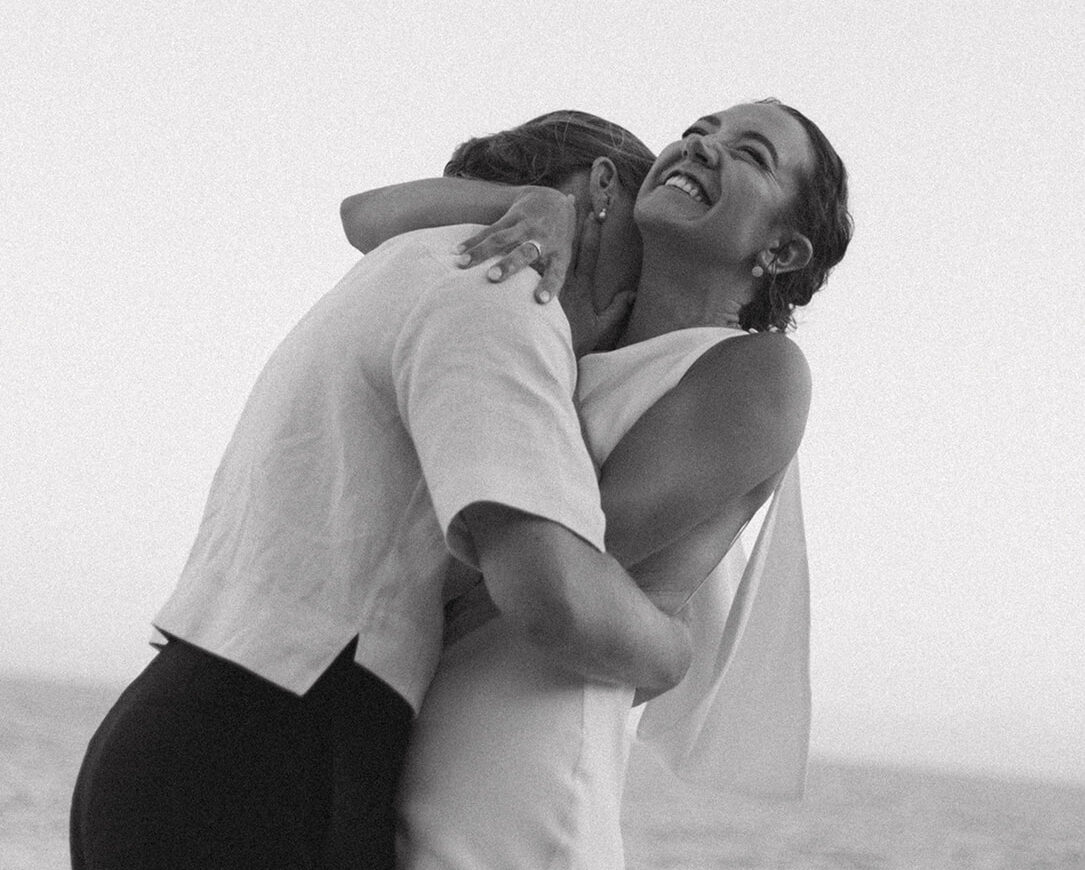
They show the way you naturally stand together, the way one of you reaches for the other’s hand, and the ridiculous face your partner makes when they’re trying not to cry.
They make room for the polished portraits you want to frame without asking you to spend your entire wedding performing for the camera.
As a queer photographer, that’s the kind of experience I want to create.
I’m here for couples who want their photographs to feel artistic, emotional, and genuinely personal. Couples who care deeply about the finished images but don’t necessarily love being the centre of attention.
And couples who want to know that the person behind the camera sees them, respects them, and is genuinely happy to be there.
If you’re planning a wedding or elopement in Vancouver, the Sunshine Coast, elsewhere in BC, or beyond, I’d love to hear what you’re imagining.
Explore My Wedding Photography
Tell me about your plans, your people, and what matters most to you. We can talk about the photographs you want to create and whether I’m the right person to make them with you.

|
About Kelly Schuster PhotographyI’m Kelly Schuster, a cinematic wedding and destination photographer with more than seven years of experience photographing couples in British Columbia, across Canada, the United States and internationally. My work combines documentary coverage of what actually happens with intentional editorial direction when it helps create a stronger photograph. I think about galleries as sequences rather than piles of individual images: the wide scene, the movement, the tiny details, the portraits we intentionally make and the reactions happening when nobody thinks I’m watching. Get in touch |