How to Choose The Best Wedding Photographer

If you have six photographer tabs open right now and every single portfolio looks beautiful, you are exactly who I wrote this for. That’s the strange part of this search: the problem usually isn’t finding good work, it’s explaining why two galleries that are both objectively lovely feel completely different from each other. Somewhere in those tabs of wedding photographer portfolios you’ve run into the words editorial, documentary, film, and cinematic, and if you’re not sure what any of them actually mean, that isn’t your fault. Most of us use those words on our websites without ever defining them.
I’m Kelly Schuster, a wedding photographer based in Vancouver, B.C. I’ve spent 7 years photographing everything from twelve-person elopements on the Sunshine Coast to full-day weddings abroad — 10+ of them so far — and I also teach other photographers, which has forced me to put words to things most of us just do by feel. So here’s the plain version: what each style of wedding photography means, what each one costs in this city, and how to work out which wedding photographer is the best for you!

Start With Style, Not Budget
Almost everyone does this in the wrong order. You set a number first, start looking at photographers who fit that number, and only later realise that the images you kept saving to your inspiration folder all came from a tier above it. Then you book someone technically excellent whose way of working doesn’t match what you pictured, and the gallery comes back fine, and fine is a genuinely disappointing outcome for something you only get one shot at to remember one of the most iconic days of your life!
Try it the other way. Work out which style you actually want, then find the version of that style you can afford, because every style exists at several price points. And if part of your hesitation is that you don’t love being photographed, that’s not a character flaw, it’s a style-fit question, and it has a real answer. I’ve written about that separately over here: How To Feel Good In Front of the Camera.
The Four Wedding Photography Styles, Explained
These four labels overlap constantly, and most working photographers blend two or three of them rather than living purely in one. Treat them less as boxes and more as vocabulary: a way to finally describe what you want when you’re sitting on a consultation call.
Editorial Wedding Photographer
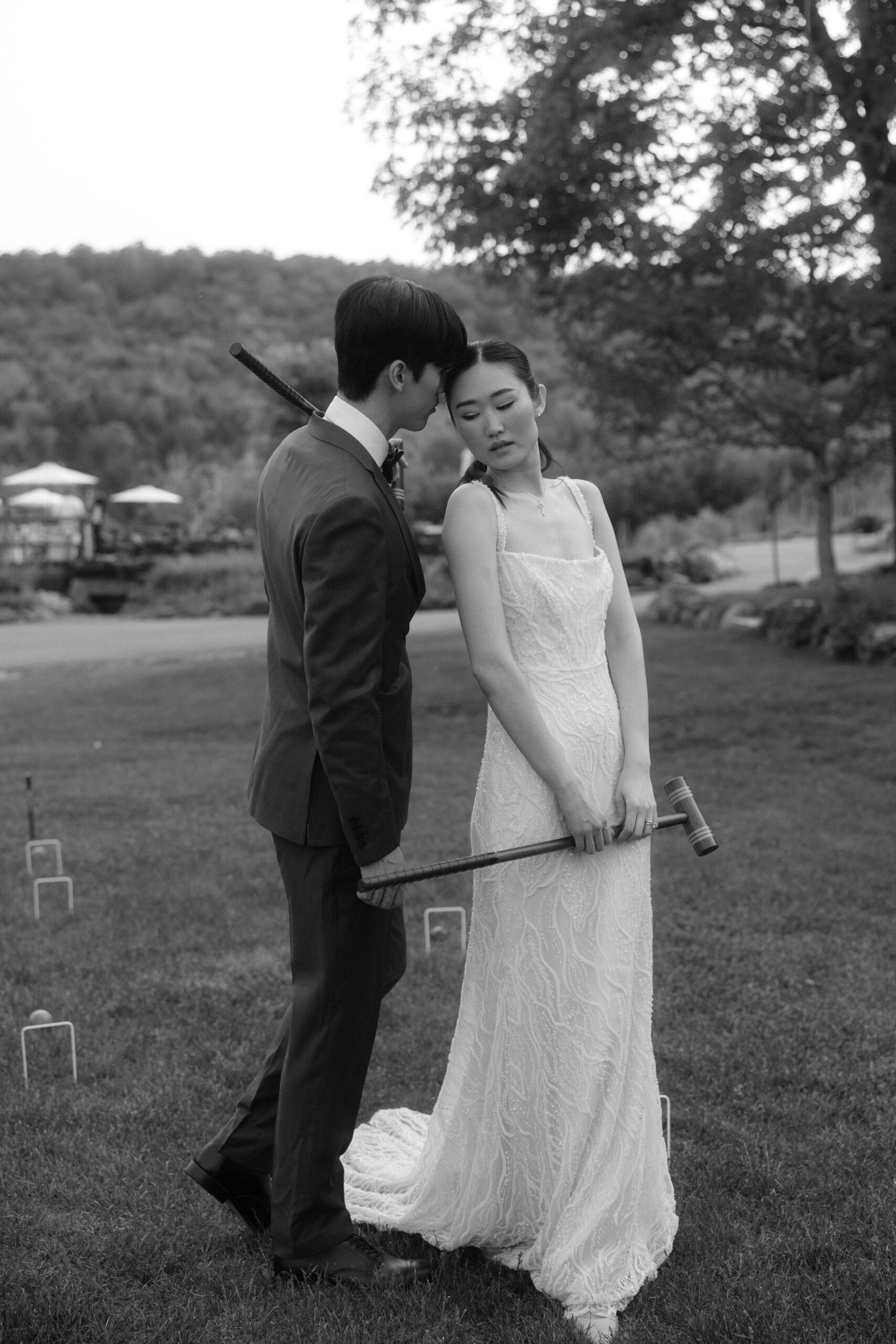
An editorial wedding photographer directs. They’re actively shaping the frame: placing you, adjusting for light, watching lines and negative space and what’s happening in the background.
It feels a little like a magazine shoot folded into your wedding day, and it produces the images people describe as striking, the ones that look intentional because they were.
On the day, this means a photographer who talks a lot and asks for things. They’ll move you into better light rather than shooting you in bad light, and they’ll usually want a protected block of time for portraits rather than grabbing fifteen minutes between the ceremony and dinner.
This suits you if you want a handful of genuinely arresting portraits and you don’t mind being guided. In fact, if you’d feel abandoned without guidance, this is probably your style. It’s regretted by couples who wanted to be left completely alone, and by couples who badly underestimated how much of the day gets carved out for portraits. If the phrase “we just want you to be invisible” describes you, keep reading.
Documentary Wedding Photographer
A documentary wedding photographer observes. They follow the timeline rather than building scenes, and their skill lives in anticipation, knowing your mother is about to cry before she does, and being in the right position for it. Nothing is set up, which is the entire point.
On the day, this looks like someone who mostly stays out of your way, works fast, and rarely asks you for anything. The gallery you get back is a true record: how it actually happened, in order, including the parts you missed because you were busy getting married.
This suits you if what you want most is to remember the day as it was, and if being told what to do makes you tense up. It’s regretted in two specific situations. The first is couples who wanted a few big, beautiful hero portraits and instead got a lovely record of events with nothing to hang on the wall. The second is couples who genuinely needed direction, said they didn’t, and then stood frozen in a field for four minutes waiting to be told something.

Film Wedding Photographer
Film means actual film: usually medium format, shot on a camera that holds ten or sixteen frames per roll. That constraint changes everything about how the day goes: fewer images, a slower pace, more deliberation before each frame. The trade is a particular quality of grain, colour and highlight rolloff that digital still doesn’t fully replicate, plus a cost structure that includes buying stock and paying a lab to develop and scan it.
Here’s the distinction almost nobody in this market spells out, and it matters when you’re comparing quotes. A lot of photographers advertising a “film look” or “film-inspired” gallery are shooting digital and applying film-emulation editing afterward. Both are completely legitimate approaches and both can be beautiful, but they are not the same thing, they don’t cost the same, and you should know which one you’re buying. I personally shoot primarily digital with film-style editing, with some true film added in when the timeline allows for it.
Film suits you if you specifically want that texture and you’re willing to pay for it and wait longer for it. It’s regretted by couples who wanted a high volume of images, fast turnaround, or the safety net of a photographer who can fire off two hundred frames during the ceremony.

Cinematic Wedding Photographer
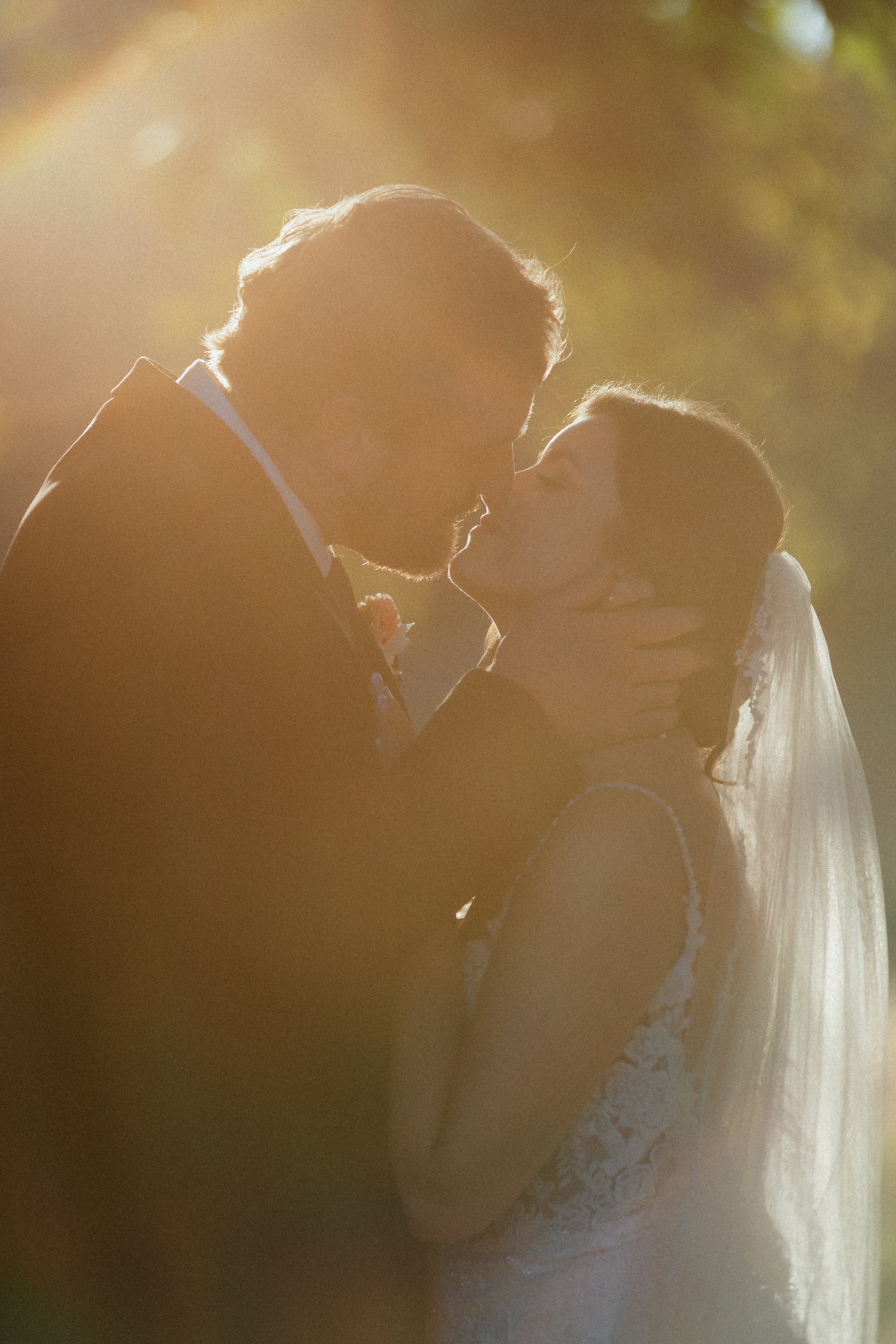
Cinematic isn’t a third thing sitting beside editorial and documentary: it’s what happens when you combine them. Take editorial’s willingness to shape light and direct a scene, keep documentary’s commitment to covering the real day as it unfolds, and then treat framing, movement and colour the way a film would treat them. You get sequences rather than isolated shots: images that read in an order and build something.
In practice, a cinematic photographer is watching for the moment and the frame around it. It means noticing that the light coming through the west windows at 6:40 will be extraordinary and quietly making sure you’re standing in it at 6:40, without stopping the day to do it. It means a gallery where the wide establishing shot, the close detail and the reaction all sit together like a scene.
This is my own approach, so treat me as biased. It suits couples who want both the hero portraits and the honest coverage and resent being told to pick one. It’s regretted by couples who truly wanted pure documentary invisibility, because a cinematic photographer will occasionally ask you for something.
Wedding Photography Styles Compared
| Style | How it feels | How it’s shot | Best for | Cost impact |
|---|---|---|---|---|
| Editorial | Directed, polished, magazine-like | Photographer places you, shapes light, and protects portrait time | Couples who want striking portraits and welcome guidance | Higher, often the top tier of the market |
| Documentary | Invisible, unhurried, true to the day | Observed and anticipated, with nothing set up | Couples who hate posing and want a real record | Broad, available at every tier |
| Film | Textured, slower, tactile | Actual film, limited frames, with lab development and scanning | Couples who want the specific look and are willing to wait for it | Highest, since stock, lab, and scanning costs are real |
| Cinematic | Scene-built, narrative, emotive | Blends direction with real coverage, led by light and sequence | Couples who want portraits and honest coverage | Mid to high, depending on coverage and team |
Average Wedding Photographer Cost in Vancouver
Published starting prices from established photographers in Vancouver and the Fraser Valley currently run from around $600 for short coverage up to $7,900 and above for premium editorial full-day work, with most full-day wedding coverage starting somewhere between $2,650 and $3,850. Those are starting prices, and that distinction does a lot of work; most couples land above the entry number for their tier once hours, a second shooter or an album go in. Elopement coverage is its own category and generally starts between $1,500 and $2,500.
Here’s roughly how the market stacks up.
| Tier | Typical starting range | What that usually includes | Who it suits |
|---|---|---|---|
| Entry / short coverage | ~$600–$2,650 | 1–6 hours, single photographer, digital gallery, minimal extras | Elopements, courthouse ceremonies, tight budgets, and smaller guest counts |
| Mid-market full day | From ~$3,850 | 6–8 hours, with an engagement session or second shooter often available as add-ons, plus an established portfolio | Most full-day weddings with 60–150 guests |
| Premium editorial / film | From ~$7,900 | 8+ hours, second photographer, album, film option, and a limited number of weddings per year | Couples for whom photography is a top-three priority |
Figures reflect publicly published starting prices across the Vancouver and Fraser Valley market as of July 2026. Costs will vary depending on your location in Canada (A city photogapher is likely more than a small rural area photographer for example.)
What Drives the Price
When two quotes come back $4,000 apart, the gap is usually not a $4,000 difference in skill. It’s most often hours of coverage, whether a second photographer is included, and what physical products come with it. Film adds real cost, because stock and lab scanning are per-roll expenses that scale with how much gets shot. Travel beyond an included radius, engagement sessions, albums and prints, and how many edited images you receive all move the number too.
So compare line items rather than headline figures. A $4,200 package with eight hours and an album can easily be better value than a $3,200 package with six hours and nothing else. Ask each photographer what isn’t in the quote, that answer is more revealing than the price itself.
Why the “Average” Is Misleading
A single average flattens a two-hour elopement and a twelve-hour wedding with a second shooter into one number that describes neither. It’s the reason “average wedding photographer cost” searches leave people more confused than when they started.
A more useful model is cost per hour of coverage, plus add-ons. Also build in seasonality: summer and early autumn are peak wedding season in British Columbia, Saturdays carry a premium over Fridays and Sundays, and the best-known photographers in each tier fill those dates first. A November Friday and a July Saturday are not the same purchase.
What an Experienced Photographer Brings To Your Special Day
Anyone can produce a beautiful gallery from a golden-hour wedding at a gorgeous venue. Experience is what shows up when conditions are bad: a 4pm November ceremony in a dark room, harsh midday sun with no shade, rain that arrives exactly when portraits were scheduled. An experienced photographer has already solved those problems dozens of times and doesn’t visibly panic while doing it.
The unglamorous infrastructure matters just as much, and almost nobody thinks to ask about it. Backup camera bodies, so a failure mid-ceremony is an inconvenience rather than a catastrophe. Cameras that write to two cards simultaneously, so a corrupted card isn’t the end of your wedding photos. Files backed up in multiple places before the gear is even unpacked. A real contract, liability insurance that venues increasingly require, and a documented plan for what happens if your photographer gets sick.
And then there’s timeline judgment. Weddings run late, yours probably will by thirty or forty minutes, and the question is whether your photographer quietly absorbs that or starts cutting the things you cared about. For reference, I deliver full galleries in ten weeks, with 60 to 100 edited images per hour of coverage, and I’d encourage you to get both of those numbers in writing from anyone you’re considering.
Questions to Ask Any Wedding Photographer
- How would you describe your own style, in your own words?
- How many weddings do you photograph in a year?
- Do you bring backup camera bodies, and do your cameras write to two cards at once?
- Where are our files backed up, and for how long do you keep them?
- What happens if you’re ill or have an emergency on our wedding day?
- How many edited images do you deliver per hour of coverage?
- What’s your delivery timeline, and what does the contract say if it slips?
- Do you recommend a second photographer for a wedding our size, and why?
- What’s not included in this quote?
- Have you ever told a couple you weren’t the right fit for them?
That last one is the most useful question on the list. A photographer who has never turned anyone away is either very new or telling you what you want to hear.
Photography and Videography as One Team
Most couples hire a photographer and a videographer separately, and those two people meet for the first time on your wedding morning. Usually it’s fine. Sometimes it’s two professionals politely competing for the same three feet of aisle space, asking you for portrait time twice, and delivering a photo gallery and a film that look like they were shot at different weddings, because tonally, they were.
I work alongside my partner Lucas James, who shoots the wedding films. One timeline, one plan for the ceremony, no duplicated portrait blocks, and a film and a gallery that actually match in colour and mood because they were made by two people who talked about it beforehand. Couples have described the result as feeling like the stars of their own movie, which is a nicer way of putting it than I’d manage.
It’s also the honest reason I use the word cinematic rather than as decoration. It’s not just an editing style, there’s an actual filmmaker in the room. Worth knowing that most photographers don’t offer this at all; several of the best in this city deliberately don’t shoot video, which is a perfectly respectable choice and one reason the two-vendor setup is so common.
Finding a Queer Wedding Photographer Who’ll See You
Almost every photographer’s site now says something inclusive somewhere. That’s good, and it also means the statement itself has stopped being useful information. So rather than tell you about my values, here’s what I’d actually audit if I were you : apply it to every photographer in your tabs, including me.
- Read the package descriptions. Do they default to “bride prep” and “groom prep” as the two categories of getting ready? A studio that hasn’t updated that language hasn’t thought about it much.
- Look for depth, not a token. One queer wedding in a portfolio of eighty is a data point. Several, across different kinds of celebrations, is a practice.
- Check the blog, not just the footer. A photographer who genuinely shoots queer weddings has published them with couples’ names and stories, not just added a line to the bottom of the homepage.
- Ask how they handle posing. “I use prompts and I model everything myself” travels across any couple. “I put the taller one behind” doesn’t.
- Notice whether the inquiry form asks for pronouns and whether anyone uses them afterward.
- Ask directly who you’d be working with on the day, including second shooters, since the person you vetted isn’t always the only person in the room.
Hiring a Wedding Photographer in Vancouver
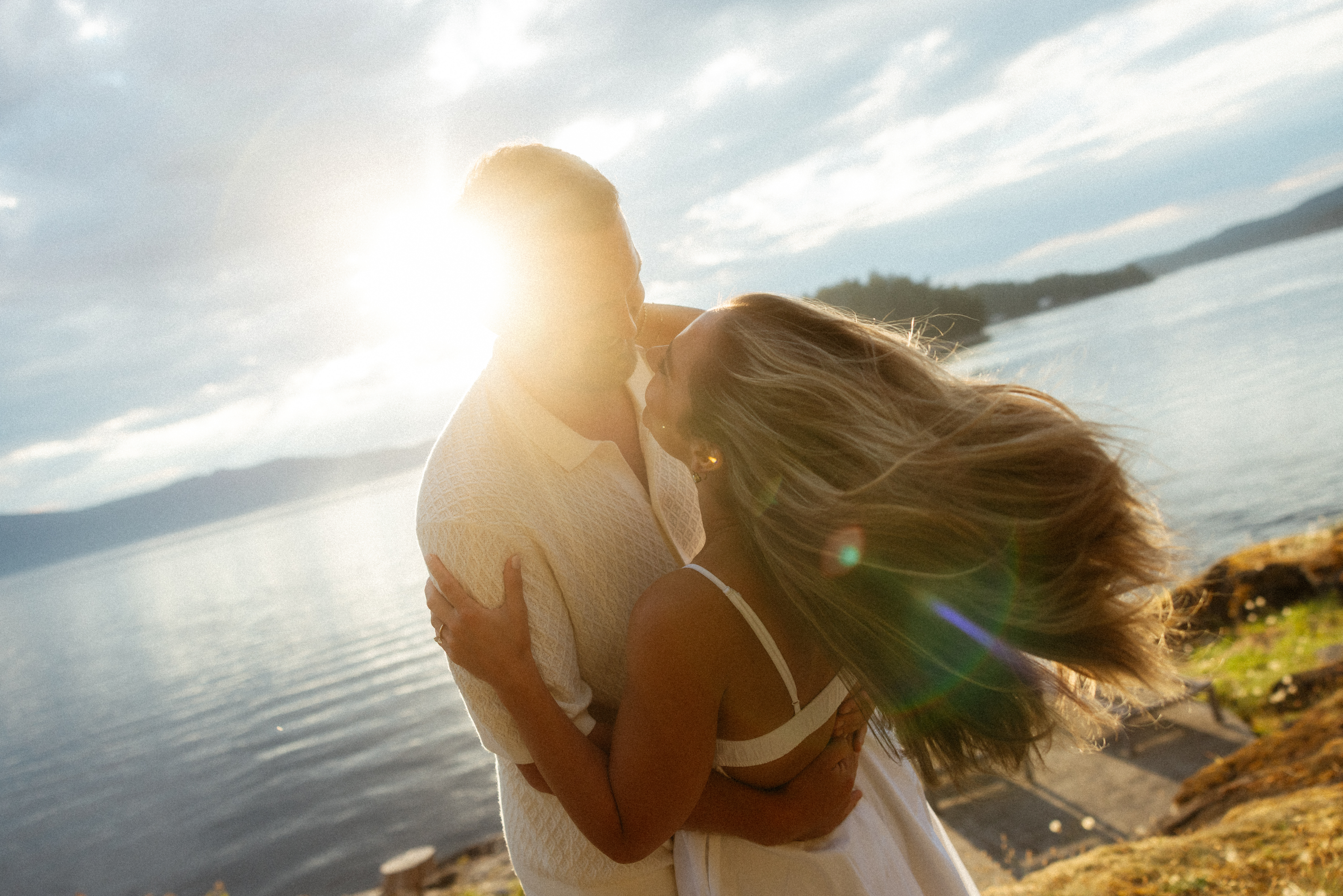
Working here has its own specifics, and a wedding photographer Vancouver couples hire from outside the region often learns them the hard way. Start with light. Our summer sunsets run past 9pm, which means golden hour can land after dinner and dancing have started, while a late-autumn ceremony may be losing usable daylight by 4:30. That single fact should shape your whole timeline… You want those shots.
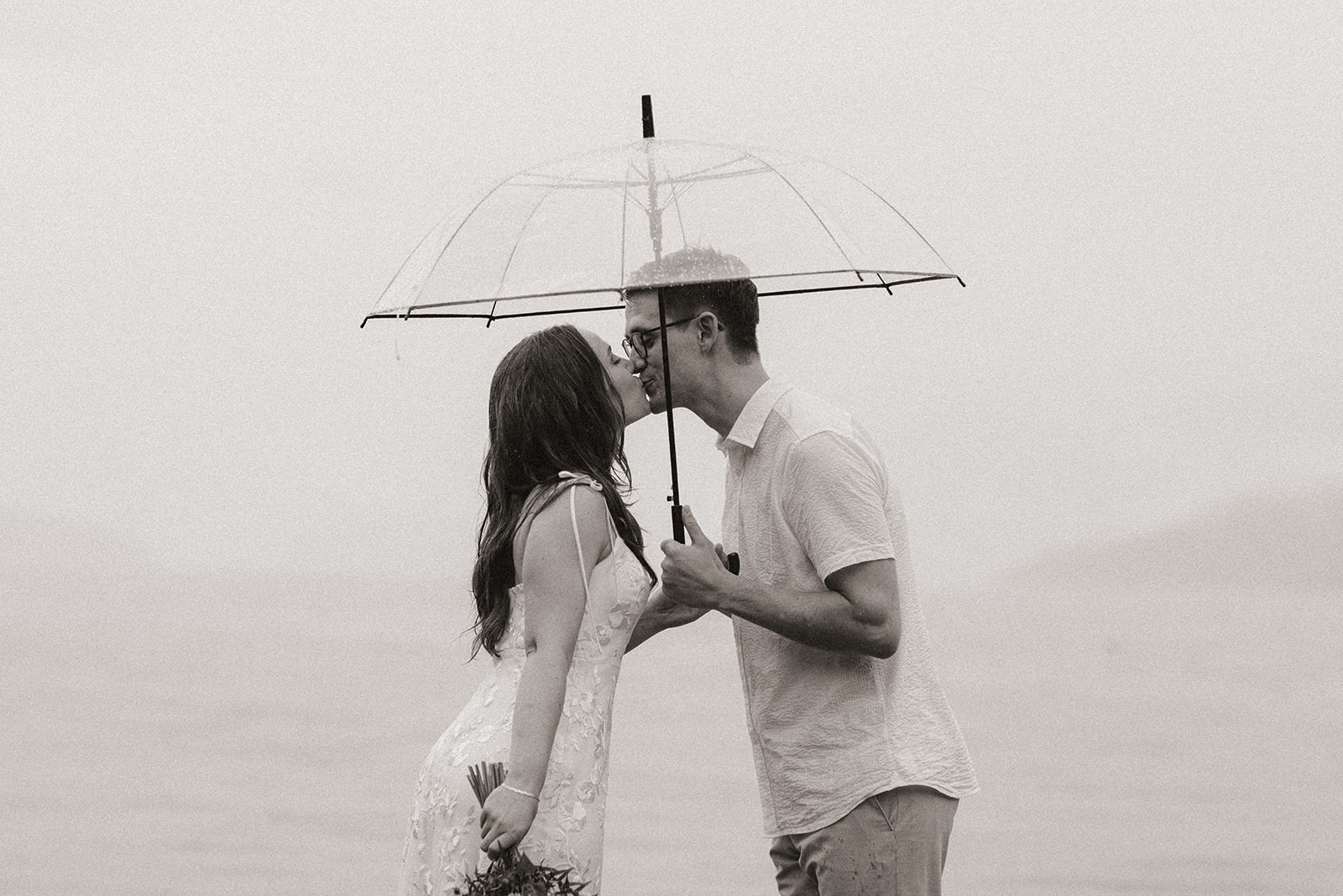
Then there’s rain, which is not a hypothetical here for roughly eight months of the year. The useful question isn’t whether your photographer has a rain plan but whether they can name one for your specific venue: covered spaces, nearby interiors, and whether they own and actually use clear umbrellas.
Permits catch people out. Several of the city’s most photographed spots require a permit for wedding ceremonies and commercial photography, including Stanley Park, VanDusen Botanical Garden and Queen Elizabeth Park, and those are arranged through the Vancouver Park Board rather than with your photographer.
Finally, be realistic about travel. A Sunshine Coast or Gulf Islands wedding involves a ferry, and a sailing plus terminal time can eat three hours in each direction, which comes out of coverage hours or gets added as travel time. Sea-to-Sky is faster, but the highway is unpredictable in shoulder season. If you’re planning an elopement somewhere remote, that logistics conversation should happen before you fall in love with the location.
FAQ
How far in advance should I book a wedding photographer?
It depends on the tier. Some photographers book three to six months out, while the busiest photographers in peak British Columbia season are taken twelve to eighteen months ahead. As soon as your date and venue are confirmed, start reaching out, photography is one of the first vendors to fill for popular summer Saturdays.
What’s the difference between editorial and documentary wedding photography?
Editorial photography is directed: the photographer places you, shapes the light and builds the frame. Documentary photography is observed: nothing is set up, and the photographer follows the day as it happens. Editorial suits couples who want striking, intentional portraits and welcome guidance; documentary suits couples who want a true record and dislike being posed.
Is film wedding photography worth the extra cost?
It depends on what you’re buying it for. Real film gives you a grain, colour and highlight quality that digital still doesn’t fully match, and many couples find it worth the premium. What you give up is volume, speed and price- fewer frames, longer turnaround, and per-roll costs for stock and lab scanning. Also confirm whether a photographer shoots actual film or shoots digital with film-style editing, because the two are priced very differently.
How many photos should I expect from my wedding?
Most photographers deliver somewhere between 50 and 100 edited images per hour of coverage, so a full day usually means several hundred. I deliver 60 to 100 per hour, with full galleries in ten weeks. Ask for both the per-hour number and the delivery timeline in writing.
Do we need a second photographer?
Most photographers recommend one above roughly 100 guests. A second shooter covers what one person physically can’t, both partners getting ready at the same time, reactions during the ceremony while the main photographer is on the aisle, and broader coverage of guests. For an intimate wedding or elopement under about 50 guests, it’s usually unnecessary.